
ABNA Aftermath – A Voice from Boot Hill
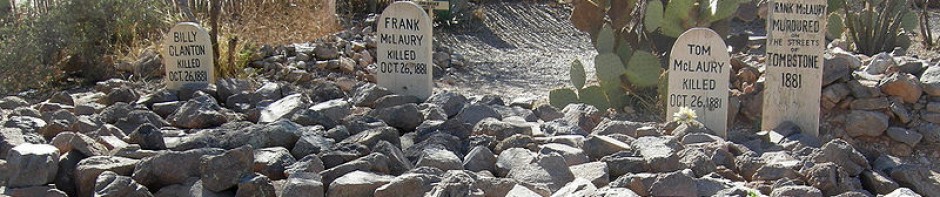
 I didn’t make the quarter-finals in the Amazon Breakthrough Novel Award contest because my 5,000-word excerpt failed to convince two “Vine Voice” reviewers that it deserved to be counted in the top 25%. What follows might be considered by some readers to be nothing more than a whine-a-thon that attacks the contest rather than accept the verdict with grace and equanimity. If you would honor me with the opportunity to alter that perception, please read on.
While both reviewers thought the opening did a good job of introducing more questions than providing answers (which I assume is their way of saying that’s what a mystery should do), the negative comments included imagery that didn’t work well and “clunky” writing. It should come as no surprise that I don’t agree with those assessments, but I’m not the one tasked with evaluating it. Their opinions are what counts in the contest. I knew that when I entered, so any complaints about that are nothing more than sour grapes.
But how would you assess the review quality of the following comments?
“There wasn’t much dialogue, and it’s difficult to evaluate a novel without seeing more of it.”
 I thought their job was to judge the excerpt, not the novel. But beyond that, this is a mystery/thriller, and a very common opening structure is to show initial events from the point-of-view (pov) of a bad guy and a victim before the main character “arrives on scene.” In this novel, one character is on a clandestine mission of nefarious intent, and the other is flying an airplane solo in bad weather while trying to land at a mountain airport at night. The first character is trying very hard not to have to talk to anyone, and the second only speaks periodically to an air traffic controller. Apparently, it’s the novel structure the reviewer didn’t care for and the resulting scarcity of dialogue rather than the quality of it.
“The author needs to reduce the numbers in the flight scene.”
 One of this novel’s primary objectives is to put readers in the pilot’s seat, around which there are lots of numbers. Other readers have told me I do a good job of presenting technical data in the right proportion with “plain” language so that the flying scenes don’t read as if they are intended only for aviators. Apparently this reviewer didn’t agree, and I’d bet there aren’t any techno-thrillers on this reviewer’s bookshelf.
Okay, I can consider both of these comments as the result of pure chance. The contest offered only two categories, one devoted entirely to young adult novels, and the second to everything else, which represents a very large amount of diversity. I have no idea if Amazon attempted to match up reviewers with genres, and I can’t imagine that individual reviewers were equally knowledgeable and proficient at evaluating them all. Such is the writer’s life and there’s nothing I can do about that. The next comment, however, is a different beast altogether.
“The author didn’t provide any connection between the two characters, and that was confusing.”
Really. Tell you what, dear visitor to my blog, why don’t you be the judge? All I ask is that you trust me when I submit that what follows is an accurate narrative picture of the opening to Pilot Error.
 About 2:47 a.m., a man carrying a suppressed pistol climbs an airport perimeter fence, sneaks past a security guard he doesn’t want to kill, and picks the lock on a door of a hangar belonging to Schiller Aviation. Once inside, he plants a padded mailer from a navigation chart provider and addressed to Larchmont Enterprises, LLC, in a box labeled with the registration number of an airplane, N924DP. After a near run-in with the guard, the man leaves without being detected and rushes off to a “rendezvous with someone else’s death.”
In the next chapter, a man named Larchmont is in a bulletproof Lincoln Town Car with a driver and a bodyguard carrying an assault rifle. Readers learn in a short flashback why he’s being so careful, including a bomb-sniffing dog to check out his private jet before takeoff. While waiting at Schiller Aviation, Larchmont sees a news report that proves he is the last man standing outside the White House who knows the details of a clandestine operation that if made public could bring down the president. It’s time to run for his life. At the jet, readers see an envelope from a navigation chart provider. Once Larchmont is airborne, they hear him talking to an air traffic controller using the call sign “N924DP.”
Okay, here’s my assessment. This novel is an aviation mystery. Mysteries have clues. It’s my job to play fair with readers and provide the clues so they aren’t too cryptic and readers have no chance to think, “Oh, now that’s important.” I think the opening pages more than adequately provide a connection between chapter one and two. If you agree with me, then consider this.
Contest entrants have to accept the role of chance in how their excerpts are assigned to Vine Voice Reviewers. They also have to accept that the reviewers are vetted by Amazon well enough to provide a reasonably fair evaluation of the excerpts. But what I think stretches the limit of acceptance is for a reviewer to apparently need footnotes to keep up with what’s going on. To contend that there’s no connection between the first two characters in my novel is, frankly, bogus.
They’re called clues for a reason.
And here’s an interesting postscript. Four days before learning that I had earned a gravestone in ABNA Boot Hill, my query and a writing sample received two agent requests for a full manuscript. At that moment, I had five queries out. It’s a very small sample in the total scheme of things, but a request rate of 40% ain’t bad.
If you stayed with me this far, thanks, and if you have any comments, please don’t hesitate to leave them.

Tosh,
Speaking as a friend and admirer, and you know I am both, let me offer a partial defense of the ABNA reviewers, after observing that the two agents who requested your manuscript are far more important at this point. It sounds to me that ABNA worked out very well for you. My own brilliantly written submission didn’t even get through the initial weeding out process.
“There wasn’t much dialogue, and it’s difficult to evaluate a novel without seeing more of it.”
A strict reading of this comment indicates that the reviewer did not evaluate your entry on the basis of dialogue. Nowhere does he/she say that the scarcity of dialogue in the opening chapters was indicative of poor writing, just that there wasn’t enough in the excerpt he/she was given to do a fair evaluation of your dialogue writing skills.
I would say, however, that dialogue is an essential tool for establishing an emotional connection between the protagonist and the reader, a connection that needs to be made early on if you want to sustain the reader’s interest. Maybe you should consider providing an opportunity for some revealing dialogue in the first chapter. Or maybe not.
“The author needs to reduce the numbers in the flight scene.”
This seems to be a pretty mild criticism, but an overwhelming reliance on the recitation of numbers can spoil even the best techno-thrillers. (I don’t know if this is true in your case).
“The author didn’t provide any connection between the two characters, and that was confusing.”
I agree that the reviewer seems to have missed the clues you so carefully placed, however, I’m not sure that the delivery of an envelope establishes the kind of connection that the reviewer had in mind. It seems possible that some readers might initially have been led to believe that Larchmont had previously delivered the envelope to his own plane for some nefarious reason. Is there another character which the reviewer might be referring to, or are these the only two characters in the excerpt? If so, the connection you provided seems more than adequate.
I don’t think there is any way that Amazon could adeqately assess their Vine Voice Reviewers. They would have to have a full-time staff of review reviewers. The only apparent criteria for becoming a VVR is writing a lot of reviews on Amazon and many of the people who write lots of reviews are terrible critics with closed minds more interested in telling you about themselves than the material being reviewed. You might want to read some of the reviews on Amazon of some of your favorite books to see what I mean.
Keep on writing!!! Nobody in our group deserves to be published more than you do, if only on the basis of hard work.
David:
As always, thanks for visiting the site and taking the time to comment. And as is usually the case with our interactions in regard to the craft of writing, I both agree and disagree, which from my perspective invigorates our discussions by stretching the boundaries of our self-imposed attitudes and opinions.
As for dialogue, I don’t think your conclusion is justified. The excerpts were rank-ordered based on four criteria, each of which was rated on a scale of 1 to 5. No one but the entrant sees the written reviews because they are meant solely as feedback to the author. If the reviewer makes a negative comment about dialogue, I submit that it is only reasonable to assume the Prose/Style criteria will be rated lower than it would have otherwise been. We’ll never know, so that will have to remain a moot point.
As for the importance of readers connecting with the protagonist through dialogue early on, your suggestion that maybe I should consider revising to accomplish that is invalid unless you’d also like me to completely revise my story strategy. Mysteries and thrillers commonly use opening scenes/chapters outside the pov of the protagonist to establish the basis for the inciting event. Readers are immersed in two different worlds, that of the bad guy and the victim, prior to the protagonist ever arriving on stage.
I stated in an earlier post that I had doubts about advancing to the quarter-finals based specifically on the fact that the excerpt did not advance far enough into the novel to “introduce” the main character. Readers of mysteries and thrillers know that. A VVR who never reads them won’t have a clue, and will likely judge the strategy to be flawed, when for the intended audience it most definitely is not.
I agree that over-reliance on numbers can kill reader interest. That is specifically why I have always asked local reviewers, the vast majority of whom do not read novels with a technical emphasis, to evaluate my flying and accident investigation scenes with a critical eye. Over the past few years, I’ve received comments paraphrased as, “My eyes glazed over right about here with all this detail.”
In every case I have revised in an attempt to reach a balance so the novel has a chance with a wider audience. Over the past year or so, “report cards” have indicated that non-techno readers have generally been complimentary with my blending of aviation detail and “plain” language to help them understand what’s going on. If a particular VVR never reads this kind of novel, the evaluation will suffer accordingly.
As for the clues establishing the connection between the only two pov characters in the excerpt, I submit that the number of other readers who have read the material and would agree with me is sufficient to indicate that the VVR completely missed them. Pure and simple.
I completely agree with you about Amazon’s ability to assess their VVRs, and this experience has only validated the reality that particularly in the early stages, the luck of the draw plays a role and there’s nothing an entrant can do about it. “You buys your ticket and you takes your chances.”
I really appreciate your supportive comment, David, and I’m keeping on keeping on.